Profiling America’s Changing Electorate – The Black Vote in 2026: Turnout, Resistance and the Fight for Representation
By Tariq Khan | Pakistan Chronicle
Report from the American Community Media national news briefing, 2 October 2026
Black voters remain the most loyal voting group in the Democratic Party, but loyalty alone does not fill polling stations. That was the central message of a national briefing hosted by American Community Media on 2 October 2026. A voting rights plaintiff, a political scientist and a campaign strategist explained what could shape the midterm elections on 3 November. Their shared view was clear: Black turnout and Black political power are linked, yet one does not automatically deliver the other.
Maps, courts and the fight for representation
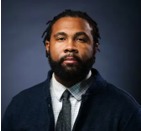
Evan Milligan, voting rights advocate and lead plaintiff in Allen v. Milligan
Evan Milligan said Black communities are in a more precarious position than when his case began in 2022. He explained that the 1965 Voting Rights Act once forced states with a record of discrimination to clear their maps with the Justice Department. The Supreme Court removed that safeguard in 2013, leaving Section 2 as the main protection.
- Alabama is 27 per cent Black, yet only one of its seven congressional districts gave Black voters a real chance to elect their choice.
- The Supreme Court upheld Section 2 in 2023, and a revised map helped send Shomari Figures to Congress.
- After the Louisiana v. Callais ruling on 29 April, the court allowed Alabama to discard its May primary results, so voters returned for a special primary in August.
- Milligan urged journalists to view this with the same clarity as 6 January 2021, because the legal foundation for open, multiracial voting is being taken apart.
He admitted that rising grocery and fuel prices compete with voting rights for people’s attention. Montgomery County could swing if more than half of Black voters turned out, but he has only seen that in the Obama and Biden years. His advice was to plan over 10, 15 and 20 years, so young people grow up treating voting as routine.
Loyal, but not always present
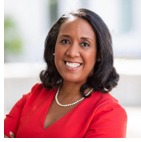
Dr Andra Gillespie, political scientist at Emory University
Dr Andra Gillespie reminded reporters that Black voters are still the most consistent Democratic bloc, and that midterm electorates are older and contain fewer occasional voters. She pointed to a gap between population and participation.
- Black Americans are close to 14 per cent of the population but usually 9 to 11 per cent of midterm voters, which she sees as room to grow.
- Around 90 per cent of Black voters backed Democrats in 2018, and congressional voting still runs close to nine to one.
- A Harvard Harris poll found 47 per cent of Black respondents named an economic issue first, against 60 per cent of white respondents.
- A CBS News poll showed Black voters as likely as others to say they are very enthusiastic about voting.
- Many polls hold only 120 to 200 Black respondents, so margins of error are wide.
- Alabama, Louisiana, Tennessee and Florida have already redrawn districts, while Georgia and South Carolina may wait until next year.
She said anger over voting restrictions is hard to separate from other grievances. Her bottom line was simple: the Black vote has two parts, how people vote and how many of them show up.
Young Black men: misread, not missing
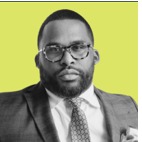
Michael Bland, Executive Director of Black Men Vote
Michael Bland said young Black men are rarely contacted, so campaigns misjudge them. Research for Black Men Vote found that 92 per cent of young Black men say voting matters, yet 26 per cent are unsure or unlikely to vote. About one in five identify as independent and another one in five as Republican.
- Their priorities are wealth building, entrepreneurship, education, mental health and the cost of childcare.
- Bland said there is no shortage of jobs, only a shortage of wealth, so he wants career fairs rather than job fairs.
- He expects the effect of healthcare cuts, which he said could remove nearly 7 million Americans from cover, to be felt from 2027.
- His group and partners including the NAACP promote National Black Male Voter Day on 24 October.
Bland said Black men were still the second most Democratic group in 2024, yet campaigns spoke to suburban white men and Latino voters while offering them little beyond hope and change. He added that athletes and celebrities do not move these voters. Trusted local figures such as city councillors, youth sports coaches and barbers do.
Gillespie explained the 2024 result differently. Republicans were better at bringing out occasional voters, and a small group of Black voters did respond to their message. Blame for the economy, she said, could now work in the opposite direction.
What comes next
Gillespie noted that the party out of power usually gains seats in a midterm, so the national mood could favour Democrats, although the effect on Black voters will differ by state and district. Bland called this election more pivotal than 2028, because the next chance to shape the maps arrives in 2030. Both urged year-round outreach rather than a rush in October, and Bland asked media to help amplify the urgency.
Speaker Bios
|
Dr. Andra Gillespie
Andra Gillespie is associate professor of political science and director of the James Weldon Johnson Institute for the Study of Race and Difference at Emory University. Gillespie teaches undergraduate and graduate courses in American and African American politics, African American political leadership, political participation, qualitative methods, and race and elections. Before joining the faculty at Emory, she worked as an analyst for Democratic pollster Mark Mellman. Her research focuses on the political leadership of the post-civil rights generation. She edited and contributed to Whose Black Politics? Cases in Post-Racial Black Leadership (Routledge, 2010), which features case studies of prominent black elected officials born after 1960 to shed light on the advent of a new generation of black political leadership. She is also the author of The New Black Politician: Cory Booker, Newark and Post-Racial America (NYU Press, 2012), which examines the evolution of black politics in Newark, New Jersey to gain a deeper understanding of the connection between racial solidarity, vote choice and policy preferences. More recently, she published Race and the Obama Administration: Substance, Symbols and Hope (Manchester University Press, 2019), which examines the representation of African American interests in the Obama Administration. She earned her Bachelor of Arts degree in Government & Foreign Affairs and African American Studies from the University of Virginia, and her Ph.D. in Political Science from Yale University. |
|
Michael Bland
Michael Bland is a veteran political strategist, organiser, and national leader in Black civic engagement. He currently serves as the Executive Director of Black Men Vote (BMV), where he leads the organisation’s mission to mobilise, educate, and empower Black men as a decisive force in American democracy. Bland recently served as Southern Battleground Director and Senior Advisor for Faith Engagement for the Harris for President campaign, directing strategies across key states and leading national engagement with faith leaders. Previously, as National Director of Leaders of Color at Education Reform Now, he scaled a national programme that trained over 400 fellows and supported the election or appointment of nearly 100 Black and Brown leaders. His background includes campaign management, notably leading Congresswoman Jahana Hayes’ historic election as the first African American woman to represent New England. He also served as Northeast Deputy Field Director, contributing to flipping Nash County for the first time in United States history. A University of Rhode Island graduate, Bland has served on numerous nonprofit boards and is a member of the Prince Hall Free and Accepted Masons. |
|
Evan Milligan
At 16 years old, Evan Milligan worked his first paid social justice job with the Federation of Child Care Centers of Alabama, a grassroots organisation born out of the civil rights movement with a focus on improving the lives of low-income families in Alabama. This was not the start of his long-standing devotion to civil rights, nor was it the end. He grew up surrounded by friends and family who doubled as community leaders, visionaries and activists. His relationship with civic engagement was cultivated at a young age. Raised in Montgomery, Alabama, the site of numerous pivotal events during the civil rights movement, Milligan can’t pinpoint the exact moment he became interested in serving his community. Whether it was hearing stories from community elders about the struggles of growing up Black during the Jim Crow era or helping his mother hand out flyers for HIV/AIDS awareness, Milligan was constantly involved in his family’s advocacy. He was also the named plaintiff in Allen v. Milligan, a case that resulted in a historic U.S. Supreme Court ruling that Alabama’s new congressional district map violated the Voting Rights Act (VRA) by diluting the votes of Black residents. The June 2023 decision means that the state, where Black people comprise 27% of the population, must redraw the map to include a second majority-Black congressional district (out of seven total). He is also the founder and former executive director of Alabama Forward. |